


Back
Inside Schools and Beyond the Building: Authentic and Experiential Learning Spaces
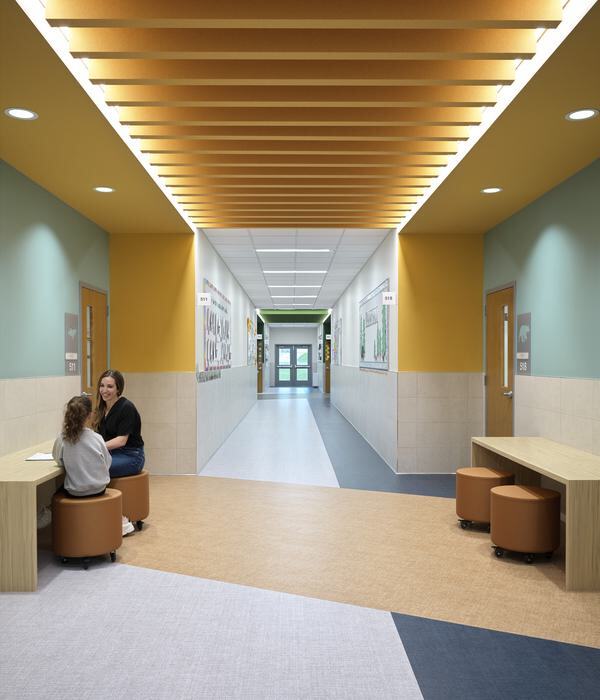
Authentic and experiential learning can happen anywhere: outside of school, in a classroom or lab, or within common areas in a school.
By Paul Klee, FAIA, ALEP, LE Fellow, LEED AP, Principal at FGMA
Originally published in Next Generation Learning | April 2026
Innovations in teaching and learning have had little impact on modern space planning and school architecture. We know that students and teachers do better when they have variety, flexibility, and comfort in their environment. This series examines how next generation learning spaces impact the learning experience for students and their teachers. If you have the opportunity to design a new school building or renovate an existing building, or if you are interested in using space better in your school, this series can help ensure that the physical spaces in your building promote the skills students need to thrive and contribute to an ever-changing global society.
Both authentic learning and experiential learning are powerful methods that can help students engage deeply with the material, develop important skills, and understand the relevance of what they’re learning. By incorporating real-world problems, hands-on activities, collaboration, and reflection into the curriculum, schools can create learning environments that foster critical thinking, creativity, and a sense of purpose. These approaches help students connect their academic learning to the real world, preparing them not only for future careers but for responsible and informed citizenship.
Authentic and experiential learning are educational approaches that focus on making learning more meaningful, relevant, and engaging by connecting academic concepts to real-world experiences. Both strategies aim to bridge the gap between what students learn in the classroom and how they can apply that knowledge outside of school. These methods emphasize active participation, critical thinking, and problem-solving skills that students can carry into their personal and professional lives.
Interdisciplinary and inquiry-based learning, launched formally or informally in a Collaborative Learning Commons, can lead to the utilization of other learning spaces throughout the school. Students can work in a collaborative way on multiple diverse activities individually or in groups at the same time. Students can engage in student-led or teacher-facilitated learning that does not have a prescribed protocol or a defined goal. The outcome is a multidisciplinary and shared experience. This approach also allows students to get their hands dirty when learning.
Authentic Learning
Authentic learning refers to learning that takes place in contexts that are similar to real-world situations. It encourages students to tackle problems, projects, or tasks that resemble those they might encounter in real life, promoting deeper understanding and long-lasting retention of knowledge.
KEY FEATURES OF AUTHENTIC LEARNING
Real-World Relevance: Students engage with tasks that reflect real-world challenges or issues. The learning process is connected to actual problems, scenarios, or contexts that students might face outside the classroom. Example: In a history class, students might analyze primary source documents to understand different perspectives of a historical event, much like how historians would.
Inquiry-Based Learning: Students take on an active role in asking questions, conducting investigations, and seeking answers rather than just receiving information passively. Example: In science, students could design their own experiments to test hypotheses or solve environmental issues within their community.
... Continue reading this article on NextGenerationLearning.org.
News & Insights
All Articles
The Power of Nature-Based Play | Salt Creek Primary School
