
In October 1871, Chicago changed forever. The Great Chicago Fire burned for days, destroying more than 17,000 buildings and leaving roughly 100,000 people without homes.
What began as a devastating fire became a defining moment in the city’s history and a lasting reminder of how quickly fire can overwhelm a community.
More than 150 years later, that lesson remains at the heart of Fire Prevention Week. Since 1922, the National Fire Protection Association (NFPA) has sponsored Fire Prevention Week — each year around mid-October — to memorialize the Great Chicago Fire and promote fire safety education.
Today, these efforts extend throughout the month as Fire departments across the country use Fire Prevention Month to promote fire safety, educate the community and encourage practices that can prevent fires and save lives. These efforts include teaching residents about smoke alarms, escape planning, cooking safety, heating hazards and electrical safety. But fire prevention is not only about preparing the public; it is also about preparing the people who answer the call.
When an emergency occurs, firefighters and EMS personnel must be ready to operate in complex, unpredictable and often dangerous environments. Their first priority is saving lives, including those of their fellow firefighters and their own. That requires repeated training that builds confidence, reinforces sound decision-making and allows crews to work together effectively before those skills are needed in an actual emergency.
Firefighters Need to Train as They Play
A modern fire station is more than a place to house apparatus. With thoughtful planning, it can become an everyday training environment that supports classroom learning, physical fitness and practical hands on exercises.
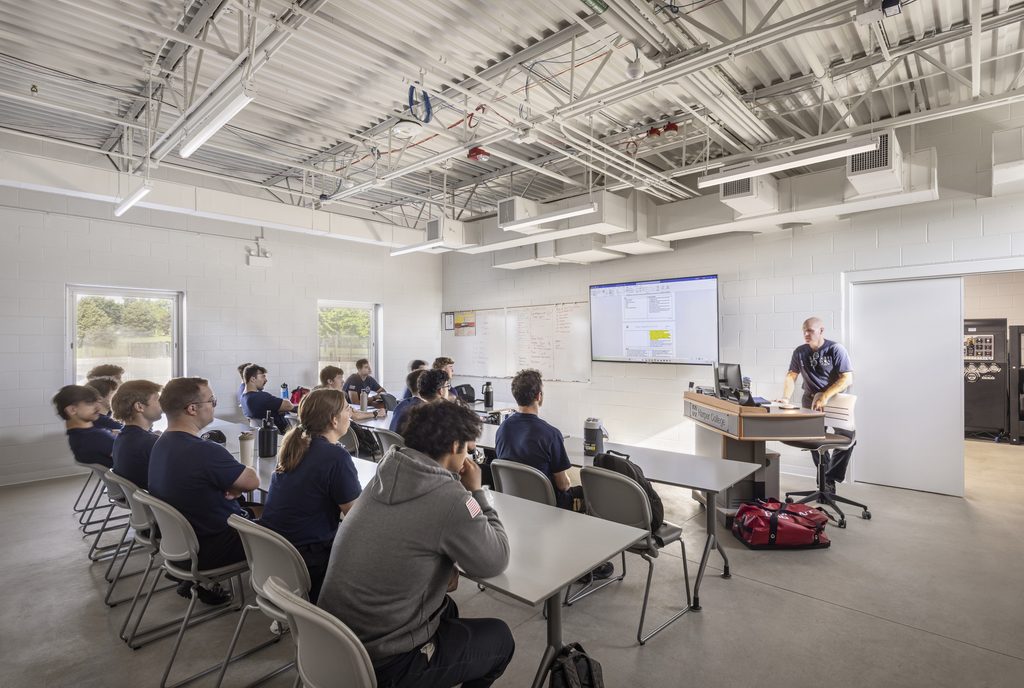
Physical training helps personnel develop strength, cardiovascular endurance, flexibility and resilience while supporting their ability to perform demanding tasks on the fireground. Classroom space provides an opportunity to reinforce policies and procedures, conduct pre-incident planning, review lessons learned and prepare crews mentally for the challenges they may encounter.
Practical Training Brings Those Lessons Together
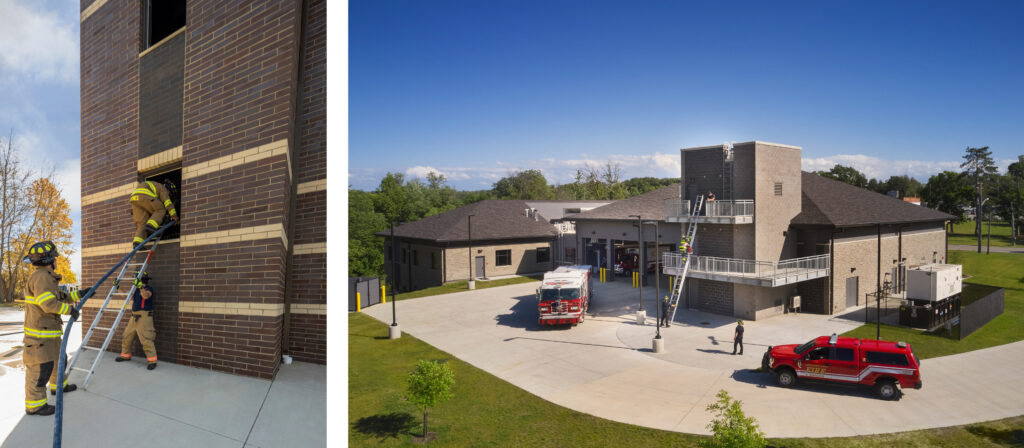
Training opportunities can be incorporated throughout a fire station. A mezzanine adjacent to the apparatus bays can be a cost-effective and all-weather solution to provide a sprinkler lab, ladder evolutions, a rappelling wall and confined space training. A training tower can provide opportunities for hose advancement, victim rescue, ladder operations, vertical rope rescue and Stokes basket operations. Roofs and terraces can also support rappelling, rope rescue and ladder exercises.
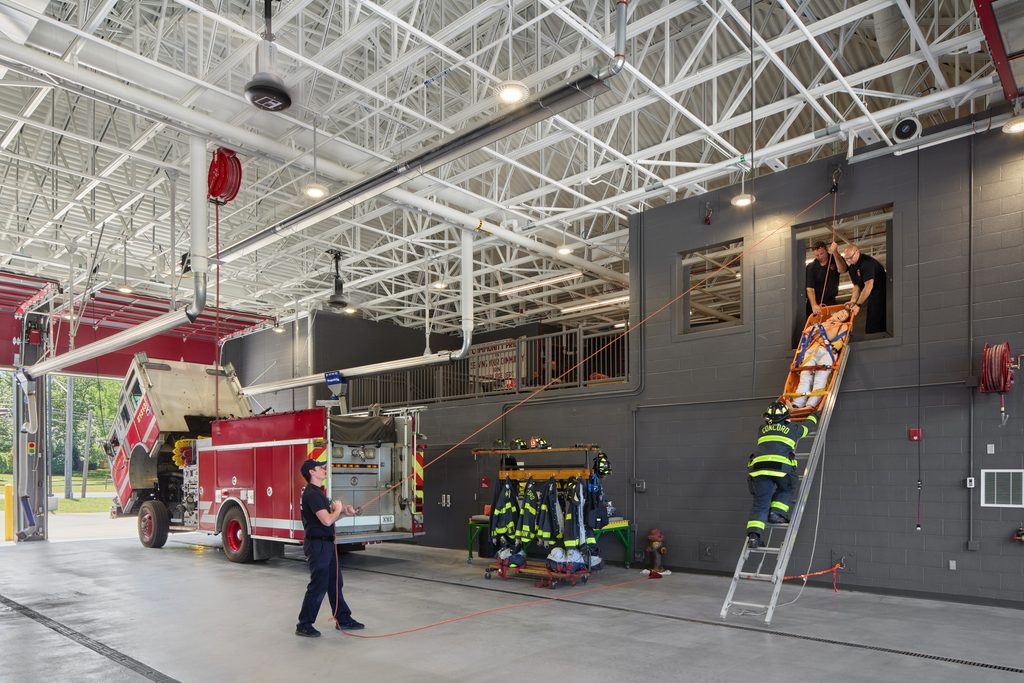
The most effective training reflects the realities of the fireground.
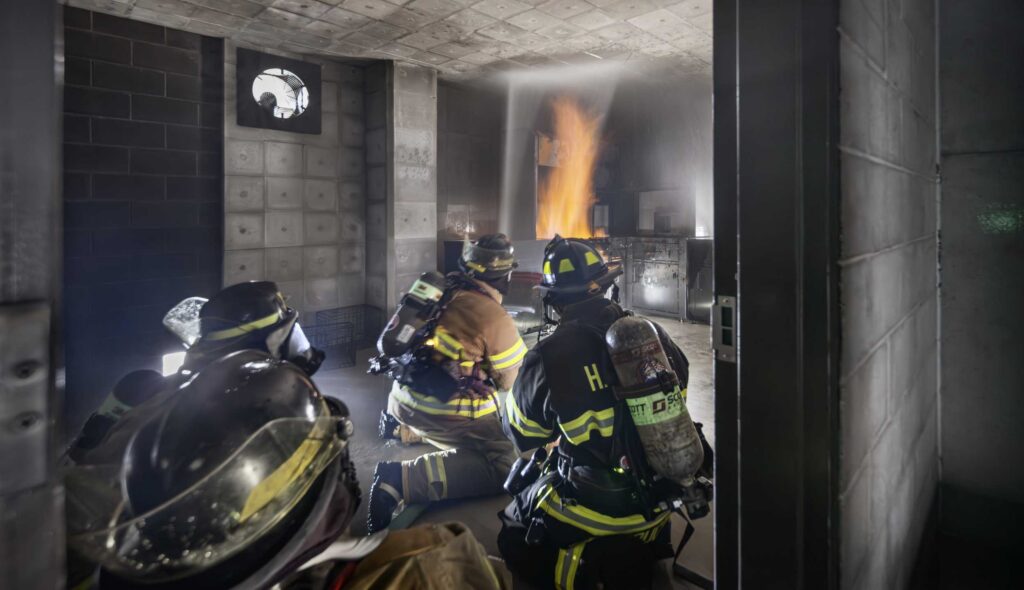
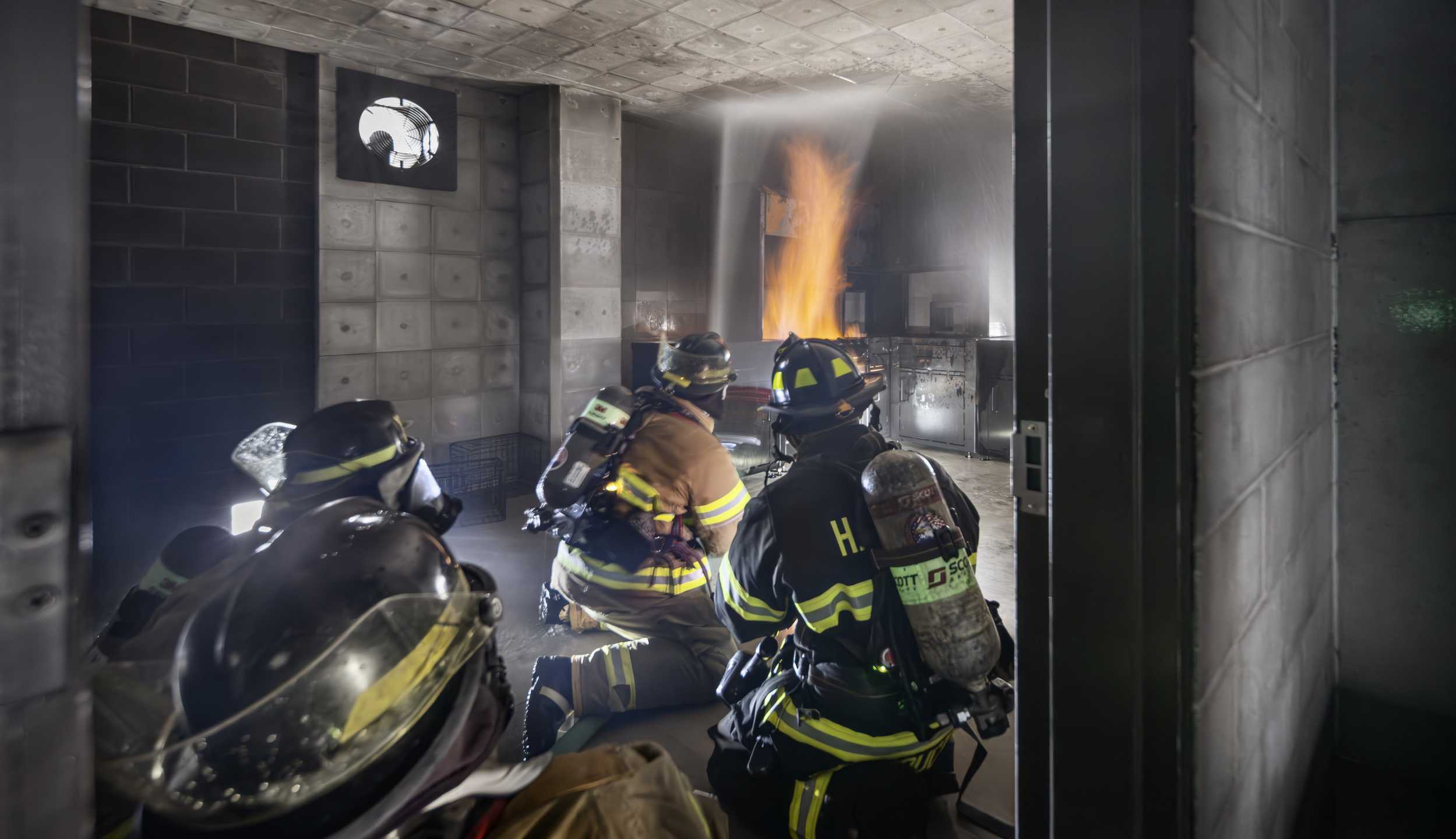
Training environments should support realistic scenarios that reflect the conditions, challenges and decisions firefighters actually encounter during an incident. At a dedicated training center, that approach can be expanded through live fire props and burn buildings, technical rescue and urban search and rescue environments, EMS simulation, apparatus and driver training, high bay spaces, classrooms and outdoor training areas.
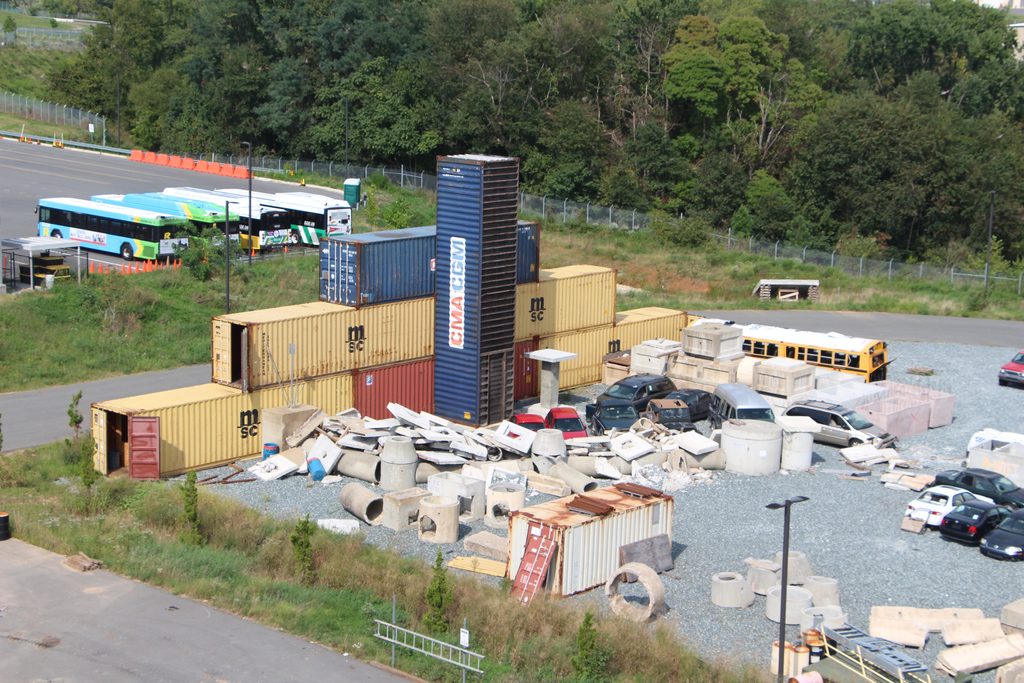
Just as importantly, scenarios should reflect the full lifecycle of an incident, from dispatch and response through arrival, incident command, fire suppression, rescue, EMS operations, recovery and return to service. However, that lifecycle must include another critical component: decontamination.
Decontamination Is Part of the Training
Decontamination should not be something firefighters think about only after an incident. It should be incorporated into training from the beginning.
Incident-based scenarios provide an opportunity to incorporate gross decontamination into training. Crews can practice on-scene decontamination, management of contaminated PPE and equipment, establishing designated areas for contaminated and clean operations, and transitioning safely from emergency operations to post-incident procedures.
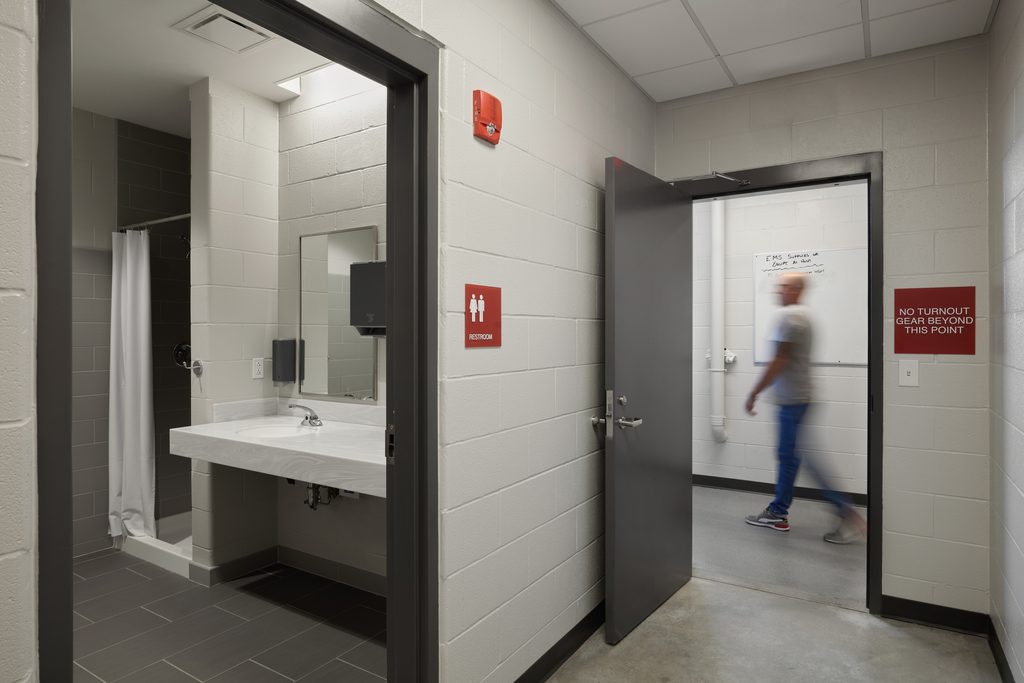
Integrating these steps into the scenario reinforces decontamination as an essential part of the incident lifecycle rather than a task addressed after the emergency. It helps crews build consistent practices for managing potential exposure and supports the safe transition from active operations through recovery and return to service.
The lesson of the Great Chicago Fire: preparation matters well before an emergency begins. By educating the public, investing in firefighter training, designing stations and training centers for realistic scenarios and making decontamination part of every exercise, fire departments can better prepare for the emergencies of today and the challenges of tomorrow.