

Back
School Construction News | Supporting Neurodiverse Learners and the Evolving Needs of Higher Education

Higher education is changing fast, and learning spaces must keep pace.
By Carol Stolt, Allied ASID, WELL AP, Design Principal at FGMA
Originally published in School Construction News | May 2026, Volume 27, Number 2, Page 22
As technology, pedagogy, and mental-health awareness reshape how students learn, designing for neurodiversity has become essential—not optional. The question is no longer whether to accommodate different needs, but how to create environments where every student can thrive.
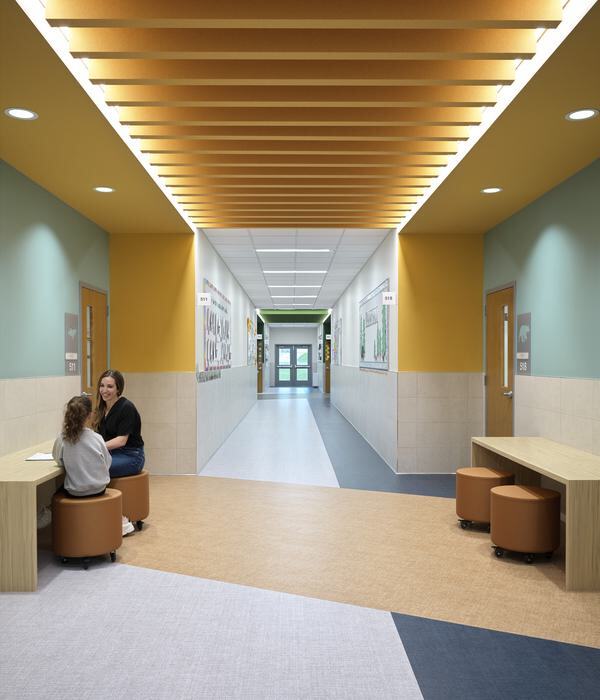
Many institutions are finding that what supports neurodiverse learners—adaptable lighting, varied seating, and better acoustics—improves learning for everyone. By combining empathy, flexibility, and technology, colleges can strengthen equity, comfort, and belonging while preparing for what’s next.


From Accommodation to Empowerment
Traditional classrooms were built for uniformity: fixed layouts, identical desks, and one teaching model for everyone. But learning has never been one-size-fits-all. Neurodiverse students—including those with ADHD, autism, dyslexia, and anxiety—process information differently, and designing for that range benefits all learners.
Empathetic design starts with listening. Understanding how students respond to light, sound, temperature, and space helps create environments that support focus and calm. Even small shifts—such as dimmable lighting, localized temperature control, or seating that allows movement or enclosure—can significantly improve engagement. What once required “special accommodations” becomes a shared benefit that reinforces a sense of belonging.
When designers collaborate closely with faculty and students, empathy yields practical solutions that elevate access to empowerment.
... Continue reading this article in School Construction News.
News & Insights
All Articles
Carrying Their Stories Forward: The Lasting Legacy of 9/11 in the Fire Service
