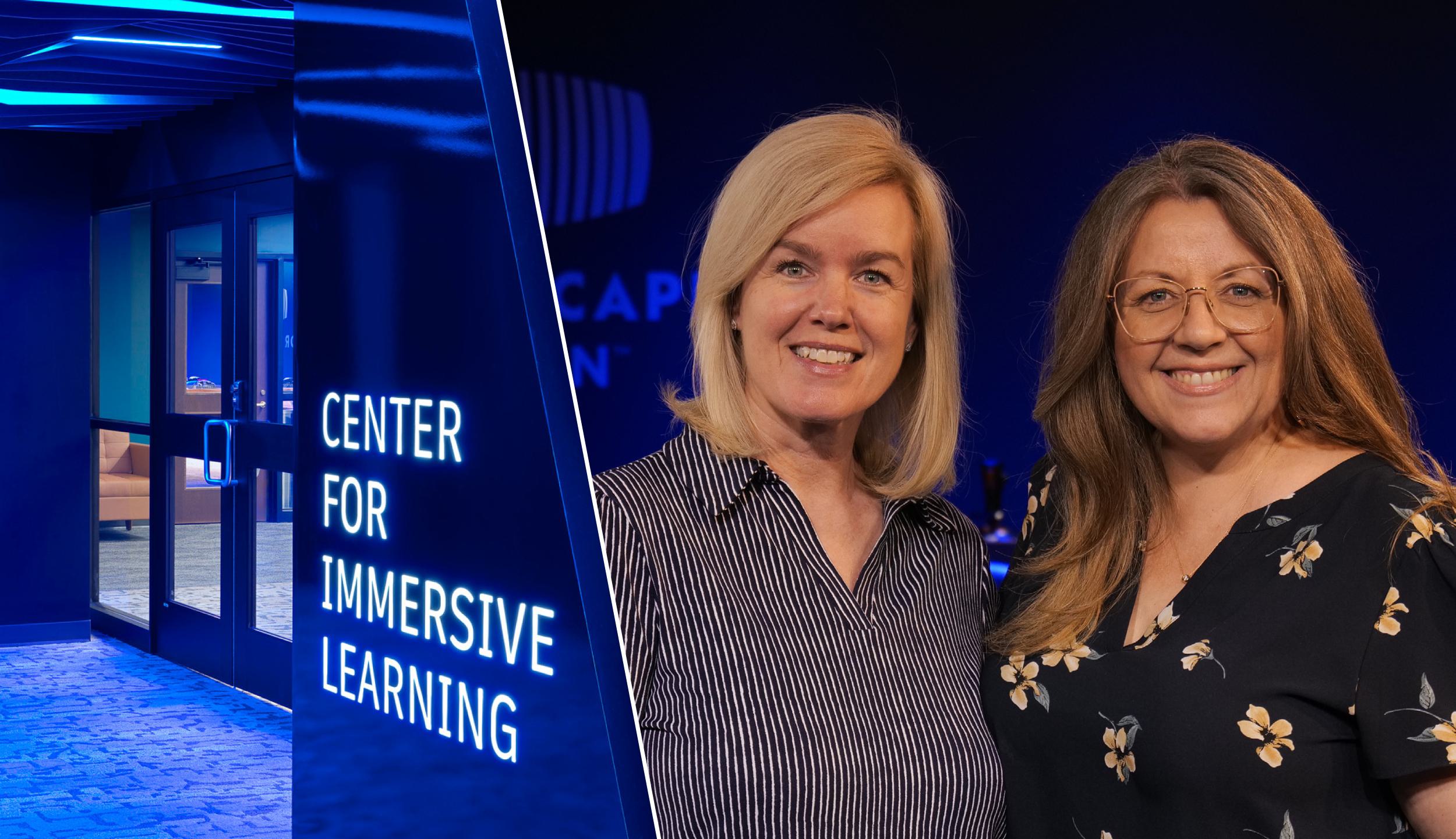
At St. Charles Community College, immersive technology and intentional design are helping students connect more deeply with their coursework and with each other.
A New Way to Experience Learning Through VR
A student settles into their seat, pulls on a headset and pauses for a moment before the room fades away. In its place, a new environment begins to take shape. There are unfamiliar species, shifting ecosystems and questions that do not come with easy answers.
Just minutes later, that same student is back with their classmates, leaning into a conversation, working through what they saw and what it means.
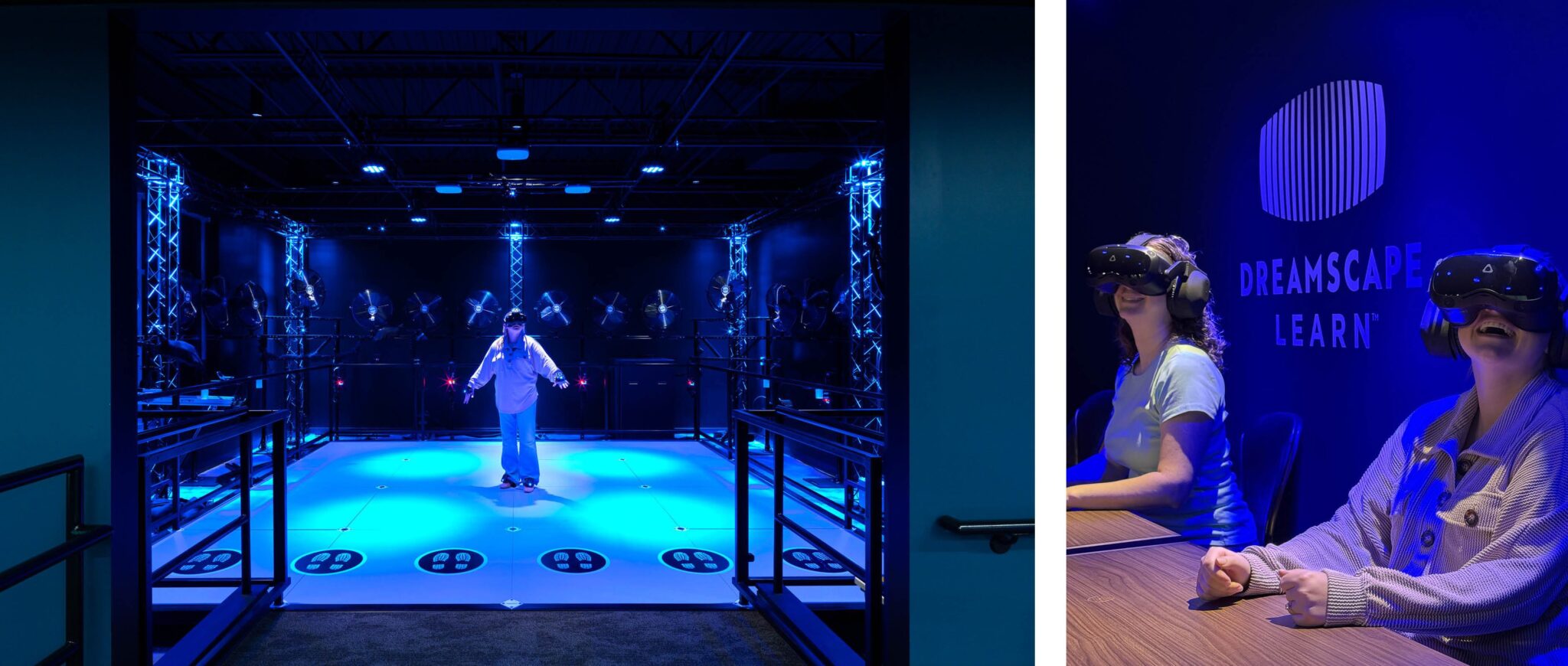
At St. Charles Community College, moments like this are becoming part of the learning experience at the Center for Immersive Learning. Through Dreamscape Learn, faculty are creating new ways for students to connect with complex ideas and with one another. For Dr. Monica Hall-Woods and Dr. Vicky Herbel, the technology has become a tool for building deeper engagement that carries beyond the headset.
Bringing Science to Life Through Immersive Learning
Hall-Woods, a biology professor who has spent nearly two decades at the college, sees the shift begin as soon as students enter the Explorer’s Lounge and move into the VR experience.
“They put on their headsets and are introduced to a scenario in this alien world,” she explains. “It’s the same concepts we’re learning in lecture, but introduced in a very different way.”
That difference shows up in how students respond.
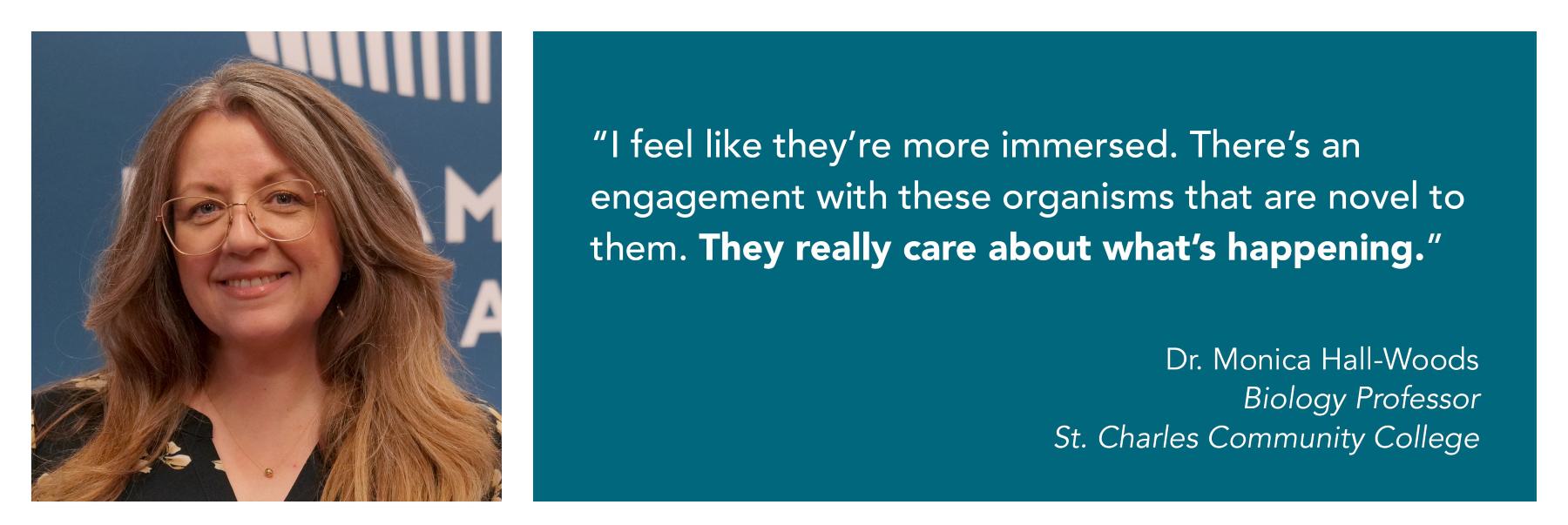
In her courses, Dreamscape Learn connects theory to application. Students explore ecosystems, observe species interactions and work through challenges that mirror real-world biological systems. In one scenario, they investigate why organisms are disappearing and uncover a predator that has disrupted the balance of an ecosystem.
“That visual experience changes everything,” Hall-Woods says. “Nothing compares to seeing it happen.”
The impact extends beyond comprehension. After one session, a student shared how strongly they reacted to a struggling species in the simulation. For Hall-Woods, that response signals something important.
“They’re not just memorizing it,” she says. “They’re experiencing it, and then we can work through it together afterward.”
She integrates the experience as part of a larger learning cycle, pairing immersive sessions with discussion and concept work. That shared experience becomes a foundation students return to as they make sense of more complex ideas.
Expanding Student Perspective Through Virtual Experiences
Within that same space, Herbel is using the technology to approach learning from a different angle.
A sociology professor in her 29th year at the college, Herbel has introduced immersive experiences to help students explore environmental sociology through place and perspective.
“They’re not just hearing about a place,” she says. “They’re in an environment that feels like that place, and then they’re talking about it together.”
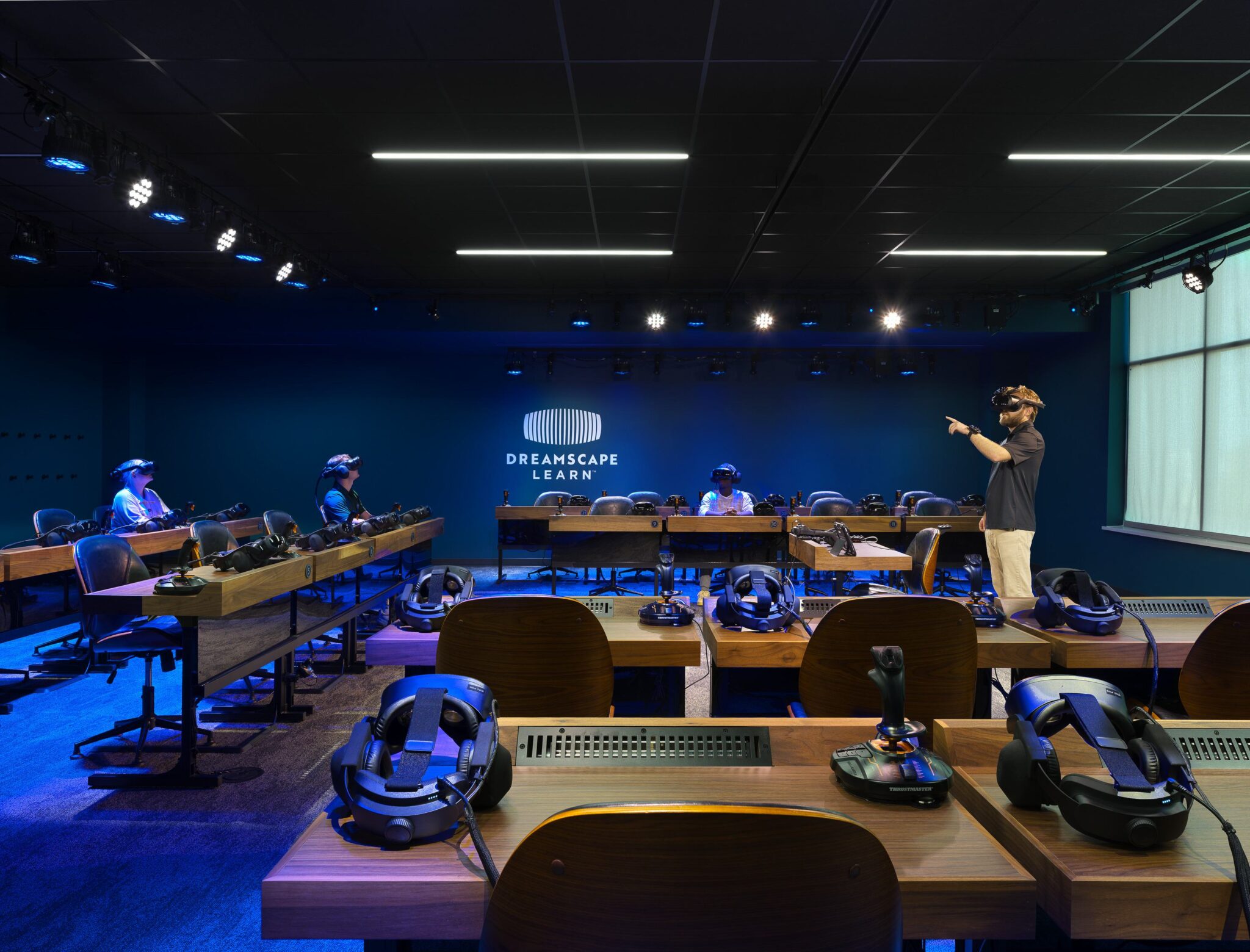
Students begin by researching locations connected to virtual environments, such as island nations, coastal regions or polar landscapes. They explore culture, values and environmental conditions before bringing that knowledge into the virtual setting.
From there, the classroom dynamic begins to shift.
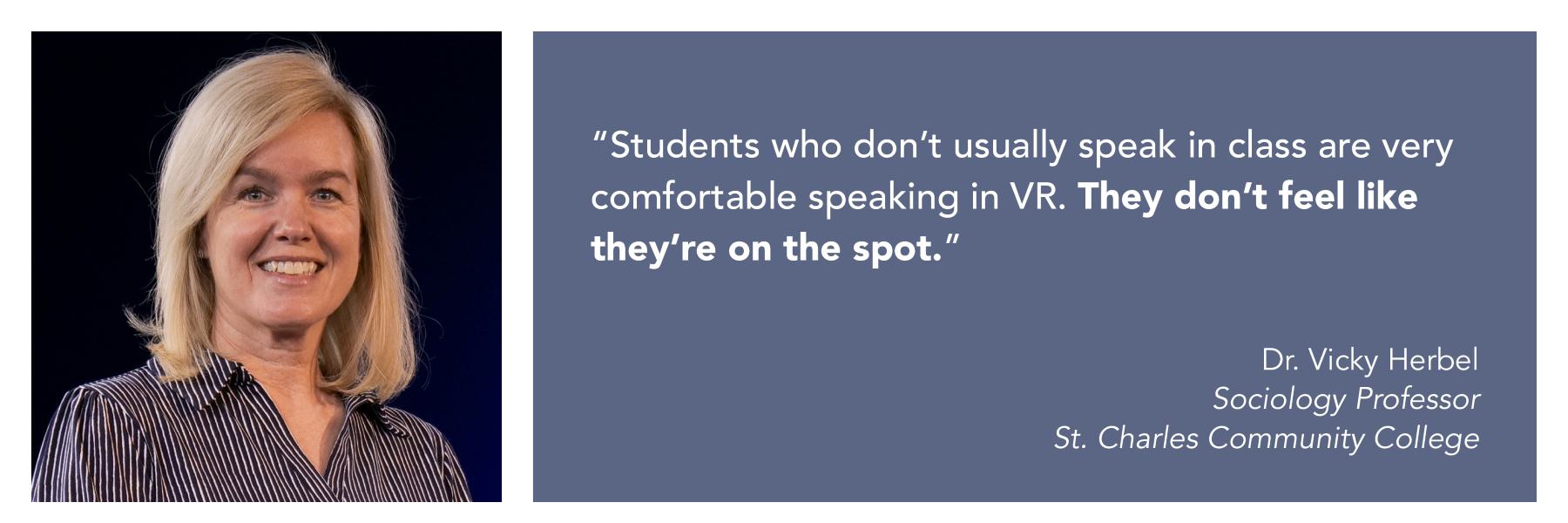
That sense of comfort opens the door for broader participation.
“They like that they’re not standing up in front of everyone,” she adds. “They feel more connected to the environment and more willing to share.”
The result is a more inclusive conversation, where more students find their voice and contribute to the learning process.
Designing Student-Centered Spaces for Connection and Engagement
The experience begins long before the student puts on a VR headset.
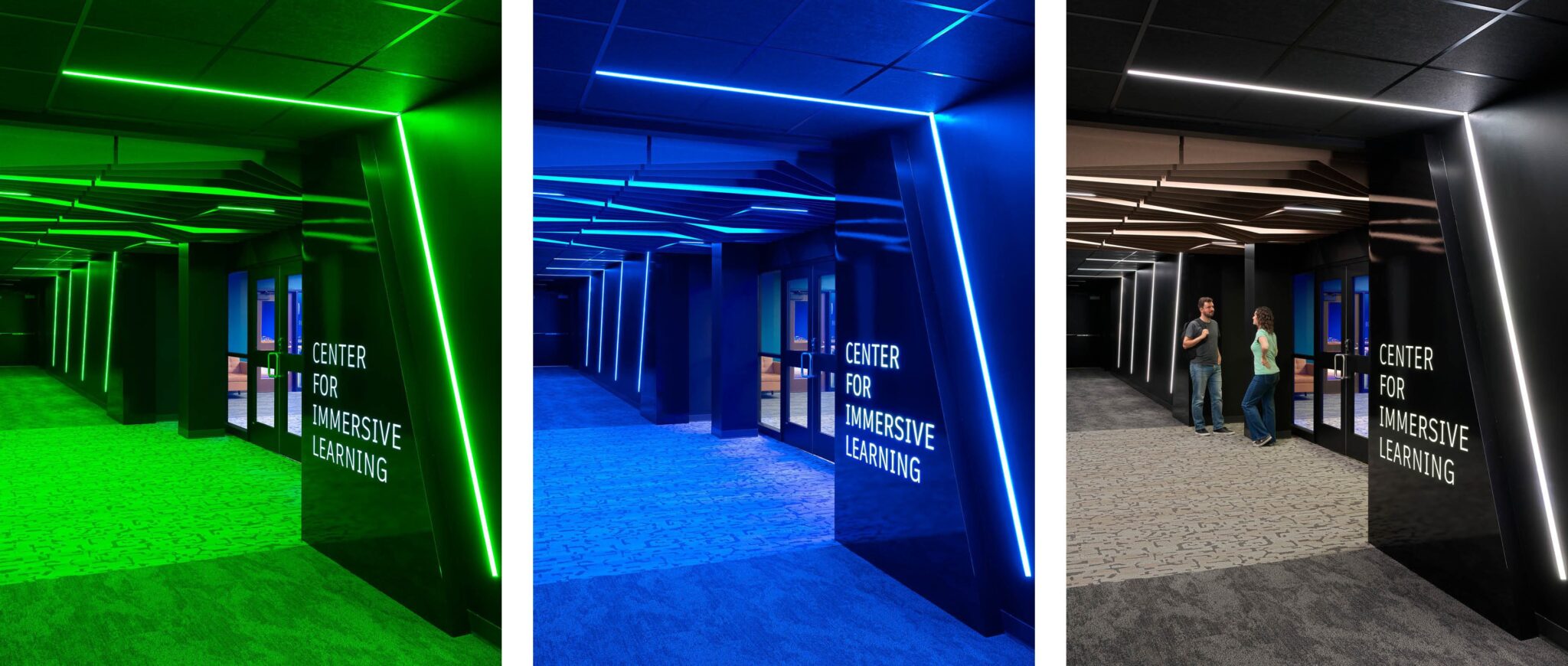
A corridor lined with color-shifting light draws students in, creating a sense of curiosity and anticipation. It feels different from the rest of campus by design. What could be a simple transition space becomes part of the experience itself, inviting students to pause, look closer and ask what’s happening inside.
For the design team at FGMA, that threshold was an opportunity.
“We think about every inch as part of the experience,” says Lori Everett, Principal at FGMA. “The corridor isn’t just a path. It’s a moment to build anticipation and spark curiosity before students even enter the space.”
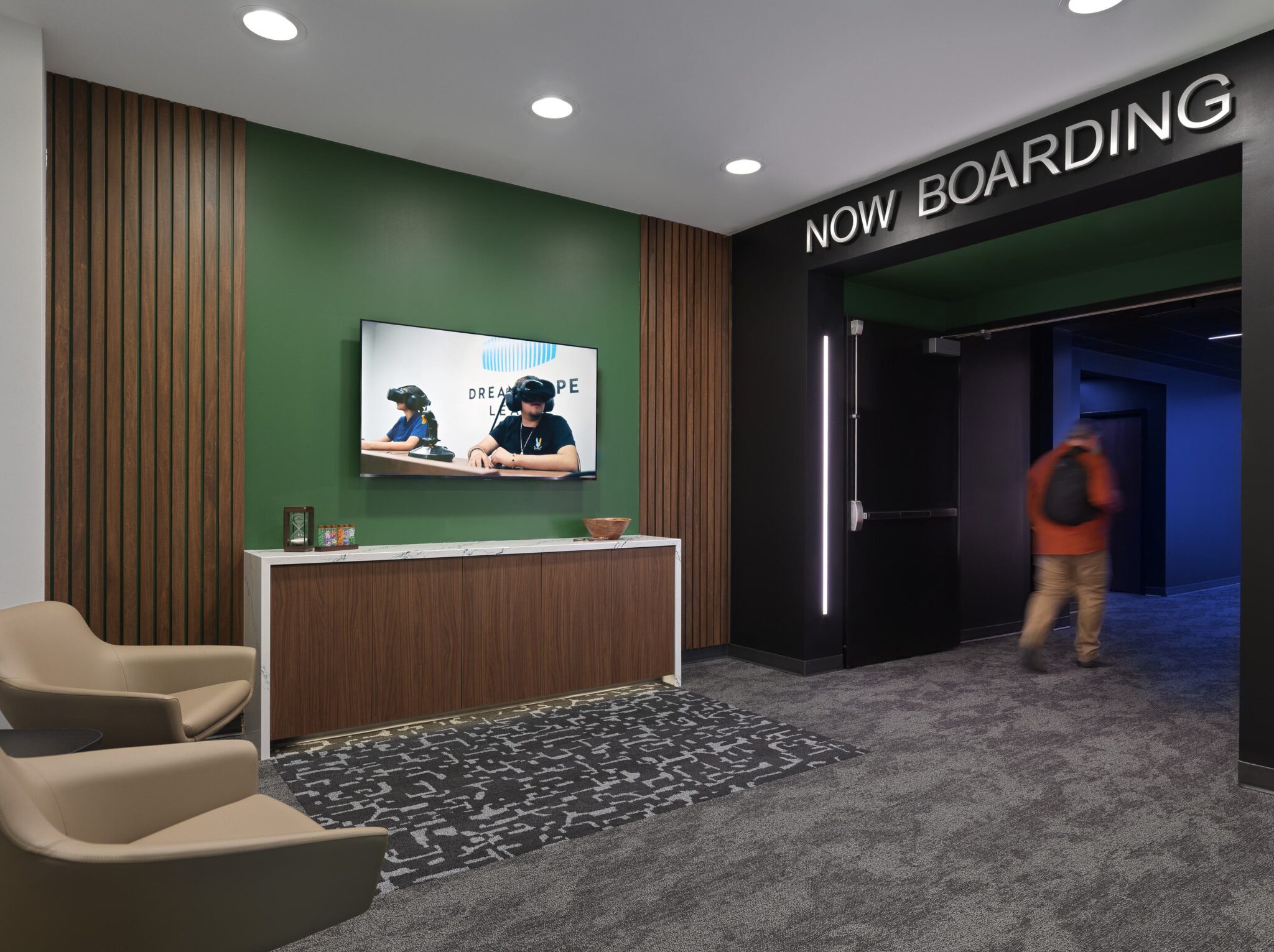
Before students enter VR, they gather in a space designed to ease the transition from a traditional classroom setting into something more immersive. They talk, look around and begin to anticipate what’s ahead.
For Lori Everett, Principal at FGMA, that intention guided the design.
“We’re designing for connection at every step,” Everett adds. “From the moment students walk in, the goal is to create an environment that feels different, one that draws them in and brings them together.”
That moment in the Explorer’s Lounge helps set the tone. It creates a shared starting point and encourages interaction before the virtual experience begins.
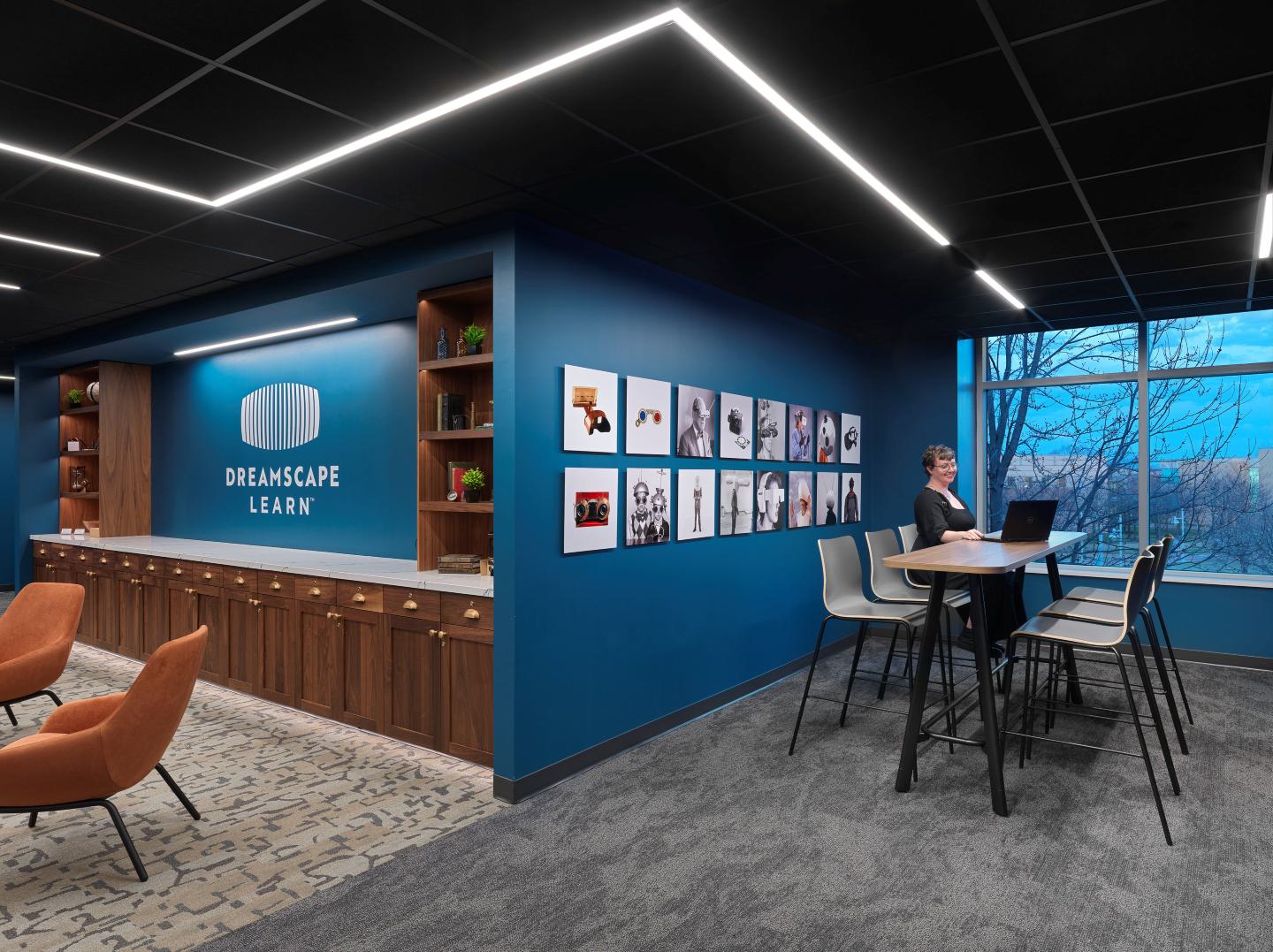
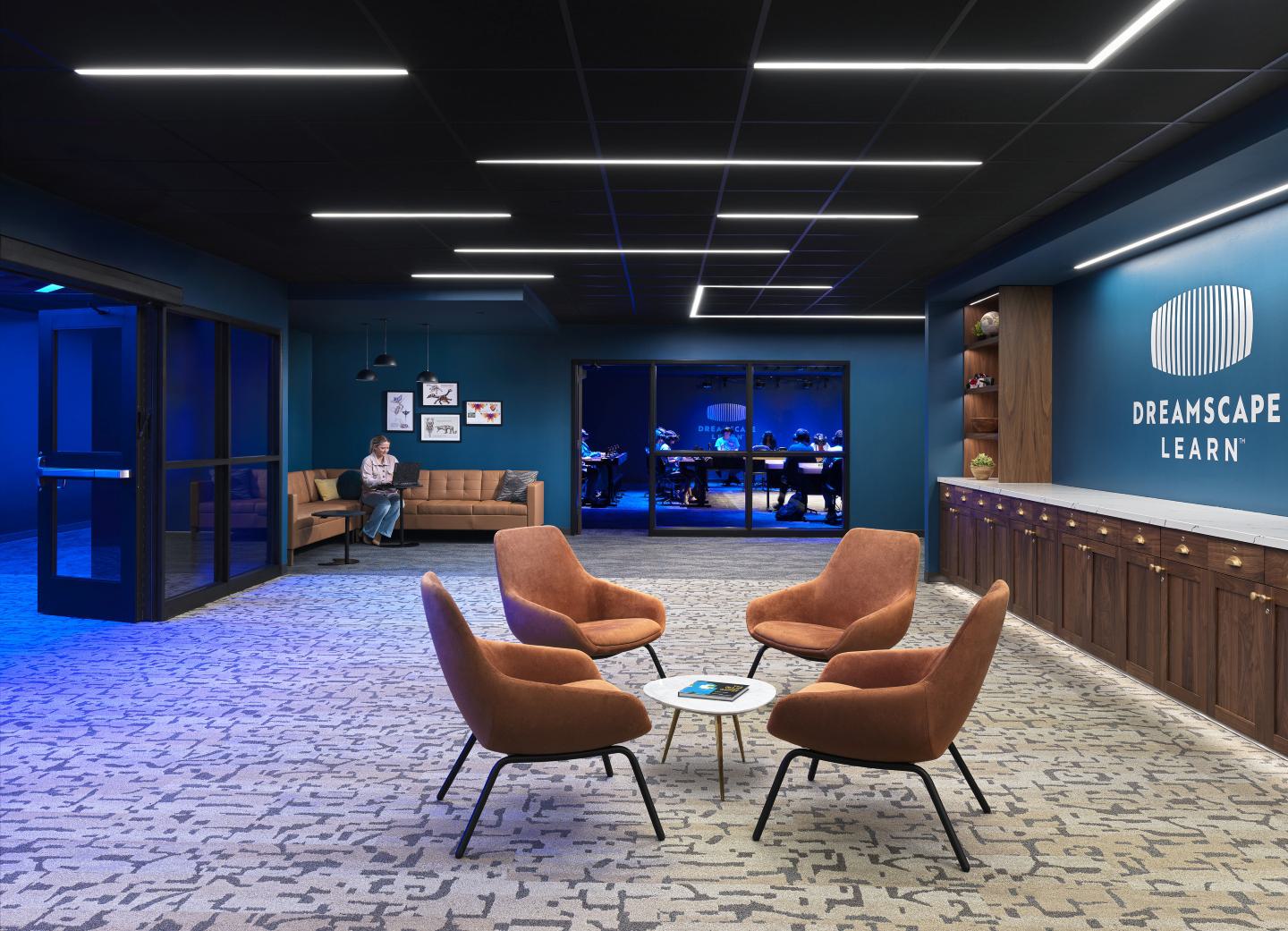
The design continues to support that connection throughout the experience. Students move between physical and virtual environments, but remain grounded in a shared process of exploration, reflection and discussion.
Shared Experiences Strengthen Learning Outcomes
Both professors point to that shared experience as one of the most meaningful outcomes. After each session, conversations deepen. Students reference what they observed, question outcomes and build on each other’s thinking.
“I see more discussion afterward,” Hall-Woods notes. “They’ve all gone through the same experience, so they have something to work from together.”
There are still opportunities to evolve. Students have expressed interest in more interactivity, greater control and expanded environments. Faculty continue to explore how to align immersive content with course goals in ways that feel seamless and intentional.
“It doesn’t have to replace your course,” Hall-Woods says. “It enhances it.”
At St. Charles Community College, immersive learning is helping create stronger connections between students, their coursework and each other. What begins in the Explorer’s Lounge continues beyond the headset, shaping how students connect, reflect and carry learning forward.
Learn More About Technology and Design in Higher Education
Video: Center for Immersive Learning at St. Charles Community College
FGMA Designs Technology Forward Higher Education Learning Environments in St. Louis Area
Adaptive Reuse in Higher Education: Repurposing Campus Buildings for Student Success