

Back
Designing for Early Learners: How Highland Primary School’s Interiors Inspire Confidence and Curiosity

Highland Primary School is a learning environment where students in grades PK-2 find safety, inclusivity and joy at school.
Highland Primary School’s new 90,000 sf facility was designed with one goal in mind: to create a safe, welcoming environment for the youngest students that provided a sense of belonging the moment they set foot inside. Interior features — like color-coded neighborhood wings, flexible furniture and intuitive wayfinding — support early childhood development and student-centered learning.
Throughout discussions surrounding the preschool experience in Downstate Illinois’ Highland Community Unit School District 5, one recurring question stood out: How can the building help children feel confident from day one? That guiding question shaped every decision in the project and is most evident in the interior design choices at the new Highland Primary School.
Wayfinding and Interior Identity That Build Confidence for PK–2 Students

Wayfinding and environmental branding were carefully crafted to support intuitive navigation while celebrating school pride. A clear interior identity helps young students understand where they belong. Designers broke up long corridors using a mix of visual cues, materials and colors. Each grade-level neighborhood is defined by a signature color and reinforced with large-scale numbers, symbols and iconography at classroom entries. These intuitive cues reduce cognitive load and build independence for early learners. School colors and mascot motifs are on display throughout the building to enliven school spirit.

Integrated Specialty Spaces That Enhance PK–2 Education and Improve School Operations
Bringing all PK–2 programs into a single building addressed significant operational challenges. New mechanical systems and energy-efficient lighting will contribute to a projected 25% energy savings compared to the district's previous multiple facilities.
In the past, students traveled between the primary and elementary schools for art, music and physical education. Now, dedicated specialty classrooms support enriched programming scaled appropriately for young learners — a unique offering at this grade level.
A welcoming cafeteria offers a connection to the outdoors and eases previous congestion. The gym, complete with a performance stage, supports community events and educational activities. Across these shared spaces, daylight and natural materials reinforce a universal design approach centered on student well-being.

Corridors as Learning Spaces: Interior Design Strategies That Support Collaboration and SEL
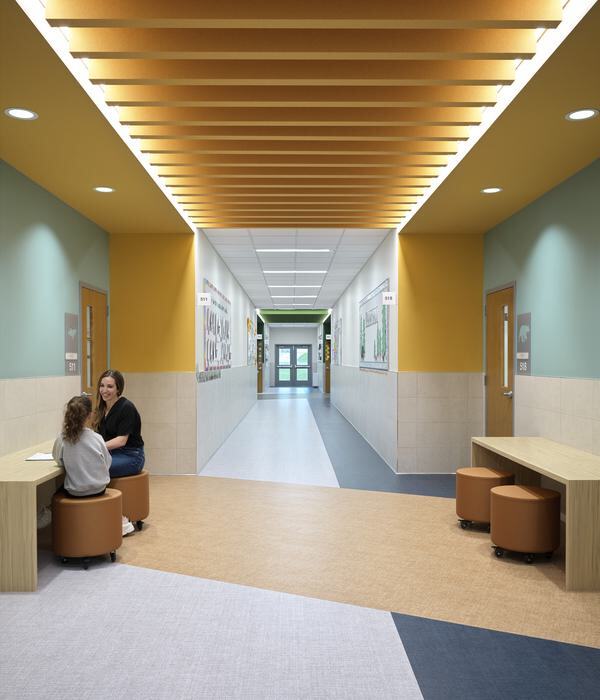
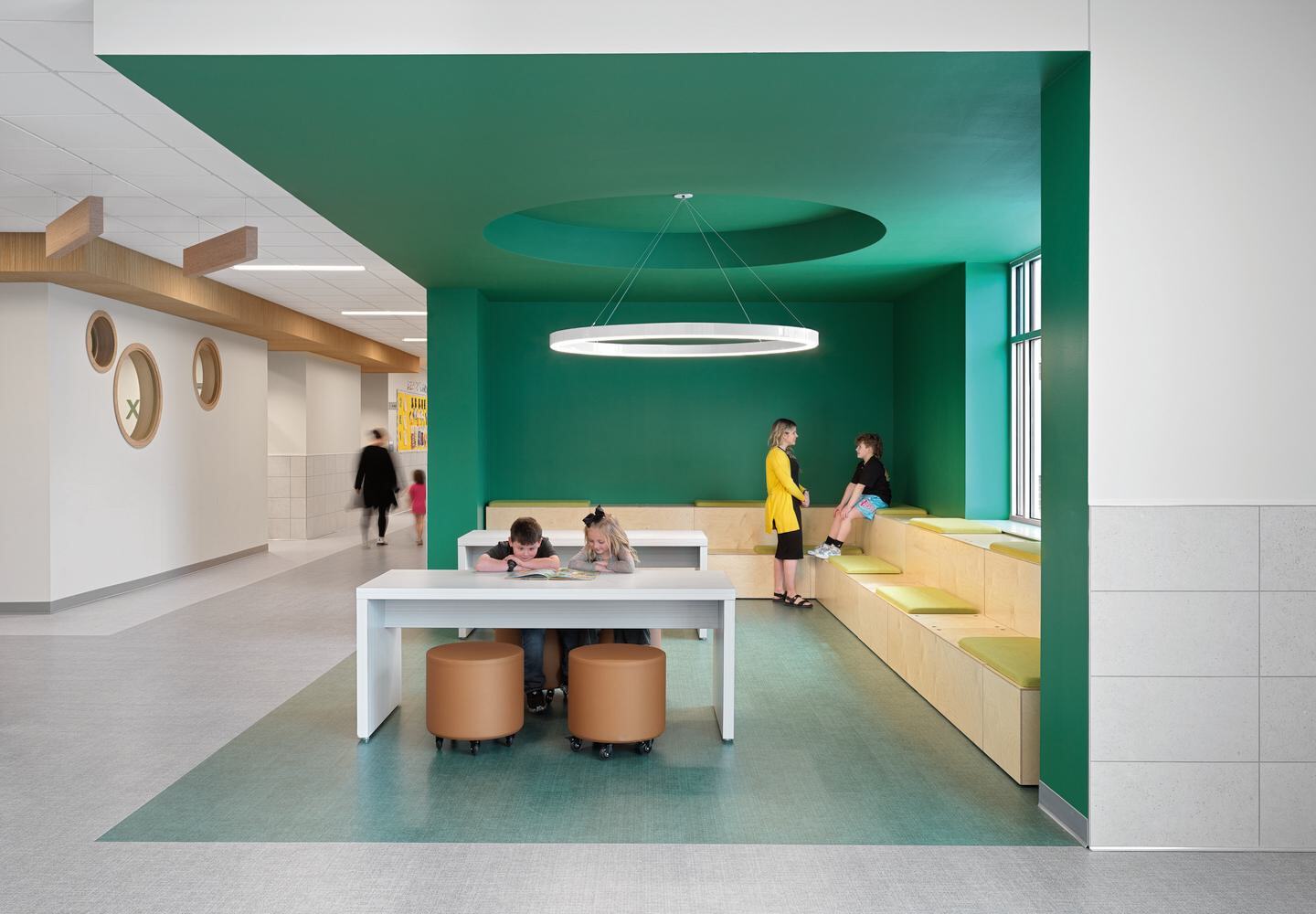
Highland Primary avoids long, institutional corridors by transforming them into learning environments. Niches, ceiling treatments, material transitions and soft lighting break up the length of the hallways, creating a friendly, child-centered scale. Collaborative nooks with built-in seating support individualized instruction, small-group work, and calming moments without pulling students far from their classrooms.
"Children are inquisitive learners who often deserve more credit,” said FGMA Interior Designer Katie Corey, NCIDQ, WELL AP. “A kindergartner may not be able to read every word, but they quickly learn that their classroom, for instance, is in the blue wing with the lion sign. I was overjoyed to see students comfortably navigating the building in the very first week of school!"

Classroom Interior Design That Supports Neurodiversity, Well-Being and Student-Centered Learning
Each classroom has views of outdoor green space, reinforcing the school’s emphasis on biophilic design and emotional regulation. Visual connection to nature — especially through direct views to the outdoors — is a foundational biophilic strategy. Furniture selections are tailored to young learners, supporting diverse learning modes and mindful regulation strategies. Alternative seating options accommodate sensory needs so students can stay in the classroom instead of getting pulled out, reducing scheduling and circulation time. Extended learning spaces with mobile tables and tiered seating support alternative learning solutions and break-out sessions. Materials and finishes were chosen with neurodiversity in mind, minimizing unnecessary visual stimuli while offering tactile comfort. Dedicated sensory rooms and resource spaces extend support for the district’s robust student services.

A Library Designed for Exploration and Early Literacy Growth
The library serves as a heart of discovery, offering child-height stacks, multiple seating options and distinct zones for storytelling, independent reading and small-group collaboration. Circular ceiling accents and warm materials layer visual softness into the space, reinforcing a sense of whimsy and welcome.

Safety-Driven Interior Architecture for Primary Schools
Safety at Highland is intentionally integrated in ways that feel unobtrusive and developmentally appropriate for young learners. At the heart of this strategy are the shared cubby rooms located between paired classrooms — spaces designed to support daily organization and reduce sensory overstimulation, yet capable of serving an additional, discreet purpose when needed.
These rooms offer a safe shelter area and provide a secondary exit out of the other classroom in the event of critical situations. For teachers and administrators, this dual use offers a layer of security without disrupting the school’s warm, welcoming atmosphere.

The building’s layout further reinforces this approach. A centrally located single entry point with controlled access ensures secure admission during the school day. Angled placement of classroom wings minimizes the endless hallway effect while positioning key areas for supervisory views. Clear sightlines extend from centralized vantage points, allowing staff to visually monitor multiple hallways. Intuitive color-coded wayfinding was designed in collaboration with local first responders to support both navigation and emergency response needs. Highland’s interior design addresses important modern safety needs while preserving a nurturing space where children feel secure, confident and free to learn.
"How a student feels in their environment is critical to their learning. To truly thrive, students must feel celebrated and safe when they walk through the doors of their school.” - Katie Corey

Sustainable Interior Materials and Biophilic Design That Enhance Student Wellness
Material selections were guided by a commitment to sustainability, with priority given to manufacturers known for responsible, sustainable practices. For examplethe flooring manufacturer specifically develops products to positively impact human experience; they are committed to assessing materials and centering responsible design. The design team evaluated each material’s full life cycle — durability and long-term maintenance needs — to support both environmental goals and operational efficiency.
Biophilic design principles, daylighting strategies and organic forms contribute to a sense of calm throughout the building. Hallways incorporate nature-inspired colors like blues, greens, yellows and wood tones. The classroom wings were carefully angled based on solar orientation to maximize natural light. Wood-toned baffles hang in an alternating pattern along an extended wood ceiling section, mimicking trees and branches. Rounded overhead lighting in the library brings a soft, natural shape to the space.
Highland Primary School embodies a collective commitment to designing environments that empower children from the moment they enter school. The project strengthens the district’s operational model, responds to community aspirations and establishes an interior environment that encourages exploration, safety and pride. Thoughtful interior design serves as a backdrop for curiosity, connection and discovery, helping establish a strong foundation for lifelong learning.
About Katie Corey, Interior Design Lead for Highland Primary School
Katie Corey, NCIDQ, WELL AP is an Interior Designer based in FGM Architects’ St. Louis office, specializing in municipal and educational projects. Katie has obtained certifications in sustainability and wellness, implementing this knowledge and expertise into all her projects firmwide. Katie is active in professional development and mentoring within the firm and has been recognized as a Sustainability Champion for her dedication to sustainability and wellness.

Frequently Asked Questions
How can interior design support confidence and independence for early learners?
Intentional wayfinding, color-coded learning neighborhoods and clear visual cues help young students understand their environment and navigate independently from day one.
How does a single PK–2 facility improve district operations and programming?
Consolidating programs into one building reduces student travel, improves scheduling efficiency and allows specialty spaces to be designed specifically for early learners.
How do school interiors improve safety without feeling institutional?
School safety strategies like shared cubby rooms, controlled entry points and clear sightlines are integrated discreetly to maintain a warm, welcoming environment while supporting modern security needs.
How does sustainable interior design support long-term operational value for districts?
Durable, responsibly sourced materials, daylighting strategies and energy-efficient design may reduce maintenance demands, lower energy use and/or support healthier learning environments over time. Every dollar saved on building operations and maintenance is a dollar that can be redirected back into a school district’s core mission, supporting students, educators and programming.
News & Insights
All Articles
FGMA Earns Great Place to Work Certification
