


Back
Learner-Centered Spaces for Innovation and Sustainability
Student-centered learning can be supported by healthy, safe and sustainable environments that allow active participation, collaboration, flexible grouping, and tech integration.
Learner-Centered Spaces
Learning pedagogy is shifting away from the traditional “teacher-focused” classrooms. Those classrooms were designed to provide a prescribed package of knowledge where the teacher acts as the primary source of knowledge, essentially “lecturing” from the front of the classroom. Instead, individualized “learner-centered” environments allow students to learn by doing, analyzing data real time, collaborating with classmates to construct knowledge, and benefitting from interactive learning.
These design spaces reimagine the pedagogy in culturally-responsive ways where the teacher facilitates learning by guiding students with a more student-centered approach to discover knowledge themselves, encouraging active participation and discussion. Learning modalities can be used to facilitate individual or multiple-sized group activities. Authentic, relevant, and complex opportunities utilize inquiry-based and project-based methodologies to build critical thinking, reasoning, and collaboration skills.
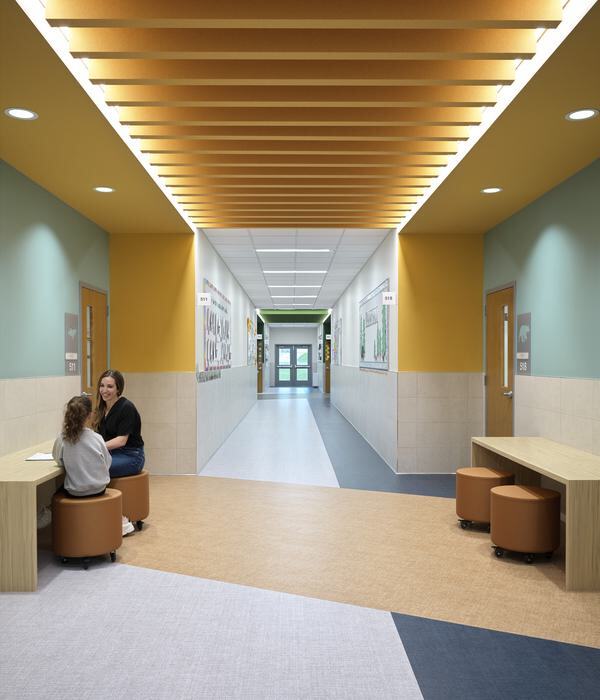
Therefore, designing an agile learning environment provides the opportunities needed for the flexible learning modalities required. These initiatives would not necessarily get rid of classrooms, but instead redesign and refurbish them to operate as “learning studios” and “learning suites” alongside common collaborative learning zones reclaimed from hallways that vastly expand available educational space and allow better teaching and learning (Nair et al., 2011).
News & Insights
All Articles
FGMA Earns Great Place to Work Certification
