


Back
How Flexible Learning Spaces Support Every Student
A flexible physical space allows learning to be personalized and differentiated, dynamically adapting to the diverse needs and talents of each student.
Versatile learning represents a significant shift in educational practices, focusing on personalization, engagement, and holistic development. It allows students to explore their interests, work collaboratively, and develop skills necessary for the future. By embracing flexibility, technology, and a more inclusive approach, schools can prepare students for success both in and out of the classroom. Versatile learning refers to an approach in education that adapts to the diverse needs, interests, and learning styles of students. In a traditional classroom, one-size-fits-all methods are often employed, but versatile learning emphasizes flexibility, creativity, and personalization. By fostering a dynamic learning environment, schools can engage students in a way that maximizes their potential.
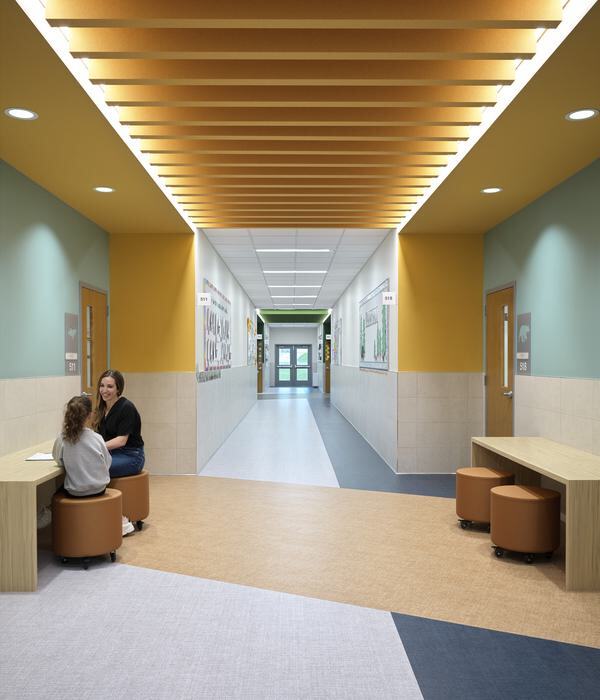
A flexible physical space allows learning to be flexible in the moment as well as over time. Learning is no longer limited to only the classroom, as innovative technology infrastructure makes it possible for any space to become an active learning zone. Design the school with flexibility, both indoors and out, to support active, project-based learning. The versatility promotes and supports sociological and technological equity where innovative learning is fully accessible to all. These qualities create learning environments that support every student and enable each of them to succeed and thrive.
Versatile learning spaces are resilient, anticipating that the curriculum will change. To the greatest extent possible, these learning environments are not program-specific. Walls that separate areas are studs and abuse-resistant gypsum wall board that can be reconfigured and are not load-bearing walls. The infrastructure (power, data, heating, cooling, etc.) is adaptable for future needs. Also, furniture is on wheels for flexible mobility. Furthermore, the building can accommodate future additions, with more student capacity in mind.

Key Elements of Versatile Learning
Differentiated Instruction: Teachers tailor lessons to accommodate students' different learning styles, abilities, and interests. This could involve offering visual, auditory, and kinesthetic learning opportunities or modifying the complexity of tasks to match individual needs.
Technology Integration: Modern educational tools and resources like tablets, online platforms, and interactive software allow students to engage with material in multiple ways. With technology, students can progress at their own pace, access a variety of resources, and collaborate in innovative ways.
Active Project-Based Learning (APBL): APBL encourages students to solve real-world problems through hands-on projects, enhancing critical thinking, creativity, and collaboration. Students are given the autonomy to choose their approach and the resources they need, leading to a deeper understanding of the material.
Cross-Disciplinary Approaches: Versatile learning often involves integrating subjects, like math with art or science with history. This holistic approach encourages students to make connections between different fields, helping them see the real-world applications of their learning.
Social and Emotional Learning (SEL): Versatile learning also emphasizes emotional intelligence and interpersonal skills. Schools that focus on SEL help students develop empathy, resilience, and effective communication, which are key to their overall growth.
Student-Centered Learning: The shift from teacher-led to student-driven learning empowers individuals to take responsibility for their education. Students are encouraged to explore topics that interest them, ask questions, and engage in discussions, fostering a sense of ownership over their learning journey.
News & Insights
All Articles
FGMA Earns Great Place to Work Certification
