


Back
Designing Learning Environments That Adapt, Perform and Endure
Next Generation Learning Guiding Principles
By Paul Klee, AIA, ALEP, LEED AP, NCARB
Principal, FGM Architects
Introduction
“Next Generation Learning is a measurable, research-based response to how students actually learn today.”
For more than a century, the physical form of American schools has remained largely unchanged, even as the world around them has transformed dramatically. Rows of desks, fixed classrooms and corridor-driven layouts were products of the Industrial Revolution — efficient for standardization, but misaligned with how students learn today. As educators, communities and designers confront the realities of a rapidly evolving global economy, it is clear that the traditional model no longer serves the full spectrum of learner needs.
Next Generation Learning (NGL) is a response — grounded in research, pedagogy and lived experience — to the way learning is accessed, delivered and experienced in the 21st century. The Next Generation Learning Guiding Principles (NGLGP) emerged from decades of work designing, studying and evaluating PK–12 learning environments across diverse communities. These principles offer a measurable, sustained framework for aligning educational vision with physical space.

From Teacher-Centered to Learner-Centered
Learning environments must shift from efficient delivery of content to meaningful construction of knowledge.
At the core of NGL is a fundamental shift from teacher-centered to learner-centered environments. Traditional classrooms assume that efficient delivery of content equals effective learning. Research shows otherwise. Learning is constructed individually, shaped by prior experience, social interaction and emotional engagement.
Learner-centered spaces support agency, inquiry and ownership. They allow students to learn by doing — collaborating with peers, engaging in hands-on exploration and applying knowledge in authentic contexts. In these environments, educators transition from “sage on the stage” to “guide on the side,” facilitating discovery rather than delivering information.


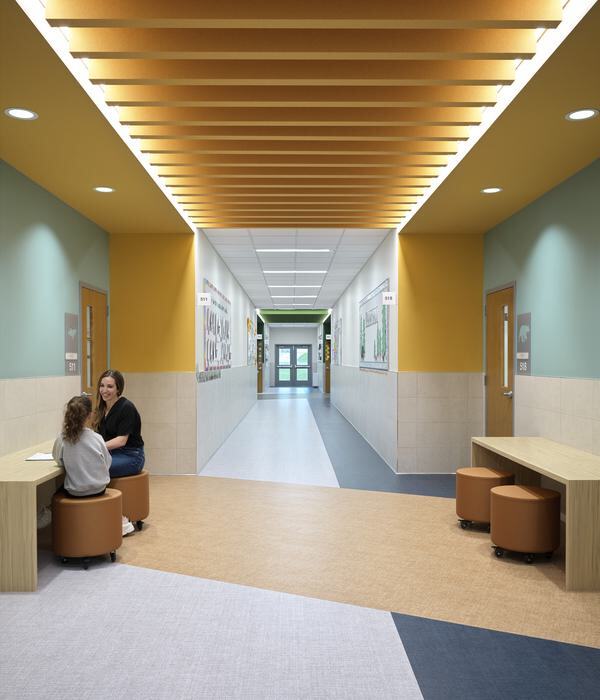
Design implications include flexible learning studios, transparency between spaces and access to shared collaborative zones reclaimed from underutilized corridors. These environments expand opportunity without eliminating classrooms — transforming them into adaptable learning suites that evolve with pedagogy.
Collaboration as a Catalyst for Learning
Collaboration is both a skill and an environmental condition; space must actively support social learning.
Collaboration is both a skill and a condition for deeper learning. Next generation schools prioritize Collaborative Learning Commons — spaces that function as the intellectual and social heart of the building. More than gathering areas, these commons support interdisciplinary work, project-based learning and real-world problem solving.
Effective learning commons are defined by flexibility, access to technology, abundant daylight and visibility of learning in action. They accommodate varied group sizes and learning modes, from large-scale project work to informal peer exchange. When centrally located within academic clusters, these spaces reinforce a culture of shared responsibility, mentorship and community.

Personalization and Choice
Learners require choice, autonomy and varied pathways to engage cognitively, socially and emotionally.
No two learners are the same. Personalized and adaptive learning environments recognize this reality by offering choice, autonomy and varied pathways to understanding. Spaces such as informal seminar learning stairs, reflective and individual nooks and small group learning pods support different cognitive, social and emotional needs.
Reflective spaces provide students with opportunities for quiet focus, self-assessment and emotional regulation — essential components of social-emotional learning. Small group pods enable targeted instruction, peer mentoring and collaborative problem solving. Together, these environments allow students to move fluidly between individual reflection and collective engagement.
Versatility and Long-Term Value
Learning spaces must be adaptable over time — resilient to changes in pedagogy, technology and enrollment.
Next generation learning environments must be resilient. Curriculum will change. Technology will evolve. Enrollment patterns will fluctuate. Versatile learning spaces are designed to adapt physically and programmatically over time.
Non-load-bearing partitions, mobile furnishings and flexible infrastructure allow spaces to be reconfigured without major disruption. Indoor and outdoor learning zones expand instructional possibilities and promote equity by ensuring access to diverse learning experiences for all students. Versatility is not an aesthetic choice; it is a commitment to stewardship and long-term value.

Integrating Pedagogy, Technology and Space
Pedagogy, technology and the built environment must be intentionally aligned — not layered independently.
NGL environments support innovative pedagogies such as project-based learning, flipped instruction and competency-based assessment. Technology is seamlessly integrated as an enabler of collaboration, research, creation and connection beyond the classroom.
From digital media production to hands-on prototyping, learning spaces must support both virtual and physical exploration. When pedagogy, technology and space are aligned, students develop critical thinking, creativity, communication and collaboration — the competencies required for lifelong learning.
Equity, Wellness and Belonging
Equity, wellness and belonging are foundational — not supplemental — to learning performance.
Design has a direct impact on well-being. Next generation learning environments prioritize physical, mental, emotional and social health. Access to daylight, fresh air, nature and comfortable, human-scaled spaces supports focus, reduces stress and fosters belonging.


Equity is embedded in NGLGP. Flexible, inclusive environments ensure that diverse learners — across abilities, backgrounds and learning styles — have access to the same opportunities for success. Schools designed around these principles become civic anchors that reflect community identity and shared values.
Conclusion
“When space aligns with pedagogy, schools move from static buildings to living systems for learning.”
Next Generation Learning Guiding Principles provide a clear framework for transforming schools from static containers of instruction into dynamic ecosystems for learning. They are rooted in research, refined through practice and validated by outcomes.
As educators and designers, our responsibility is not to replicate the past, but to prepare learners for an uncertain and rapidly changing future. By aligning educational vision with purposeful design, we can create learning environments that empower students, strengthen communities and deliver lasting impact.

Frequently Asked Questions About Next Generation Learning
What is Next Generation Learning?
Next Generation Learning aligns pedagogy, technology and space to support how students actually learn today. It emphasizes learner agency, collaboration, personalization and social-emotional growth alongside academic outcomes.
How is this different from traditional school design?
Traditional schools prioritize efficiency and standardization. Next Generation Learning environments prioritize adaptability and student-centered learning, shifting from isolated classrooms to connected learning ecosystems.
Does this approach require eliminating classrooms?
No. Classrooms are reimagined as flexible learning studios that connect to shared spaces like learning commons, small group pods and reflective areas, expanding how and where learning happens.
Can existing schools adopt these principles?
Yes. Many Next Generation Learning strategies can be implemented through renovations and phased updates, often by repurposing underutilized spaces to increase flexibility and student choice.
Why does this approach deliver long-term value?
Flexible, adaptable environments respond to changes in curriculum, enrollment and technology over time, extending facility lifespan and ensuring schools remain relevant and effective.
An FAQ for School Boards
How does Next Generation Learning improve student outcomes?
Next Generation Learning environments support higher engagement, collaboration and deeper understanding by aligning space with how students learn today. Research consistently shows that students perform better when learning environments offer flexibility, comfort and opportunities for collaboration and reflection.
How does this approach address safety and security?
Safety is foundational. Next Generation Learning design integrates clear sightlines, transparency, controlled access points and zoning strategies that enhance supervision while maintaining welcoming, student-centered environments.
Is this approach more expensive than traditional school design?
Not necessarily. While design priorities may differ, flexible and adaptable environments often reduce long-term costs by extending building life, minimizing future renovations and supporting multiple uses within the same footprint.
Can these principles work within existing budgets and facilities?
Yes. Many Next Generation Learning strategies can be implemented through targeted renovations, phased improvements and thoughtful space reallocation rather than full replacement or expansion.
How does this design approach support community values and long-term stewardship?
Next Generation Learning environments reflect community identity, support equitable access to education and ensure facilities remain adaptable and relevant for decades. This approach protects public investment while preparing students for future success.
News & Insights
All Articles
FGMA Earns Great Place to Work Certification
