

Back
An Industry in Demand: Designing Auto Tech Facilities for Student Success
This article was originally published in American School & University's November/December 2025 issue.
by Mike Behrmann, Lori Everett and Cory Kamholz
To remain relevant and successful, colleges and universities continue to adapt to the needs of students and the workforce demands of their surrounding communities. Community colleges in particular share a mandate to support educational training and job readiness that meet the needs of a quickly changing occupational landscape. Automotive and diesel technologies are industries undergoing rapid change as technicians adapt to highly sophisticated electric vehicles and internal combustion engines that pair with fuel-saving technologies, camera and sensor support, self-driving capabilities and other emerging innovations.
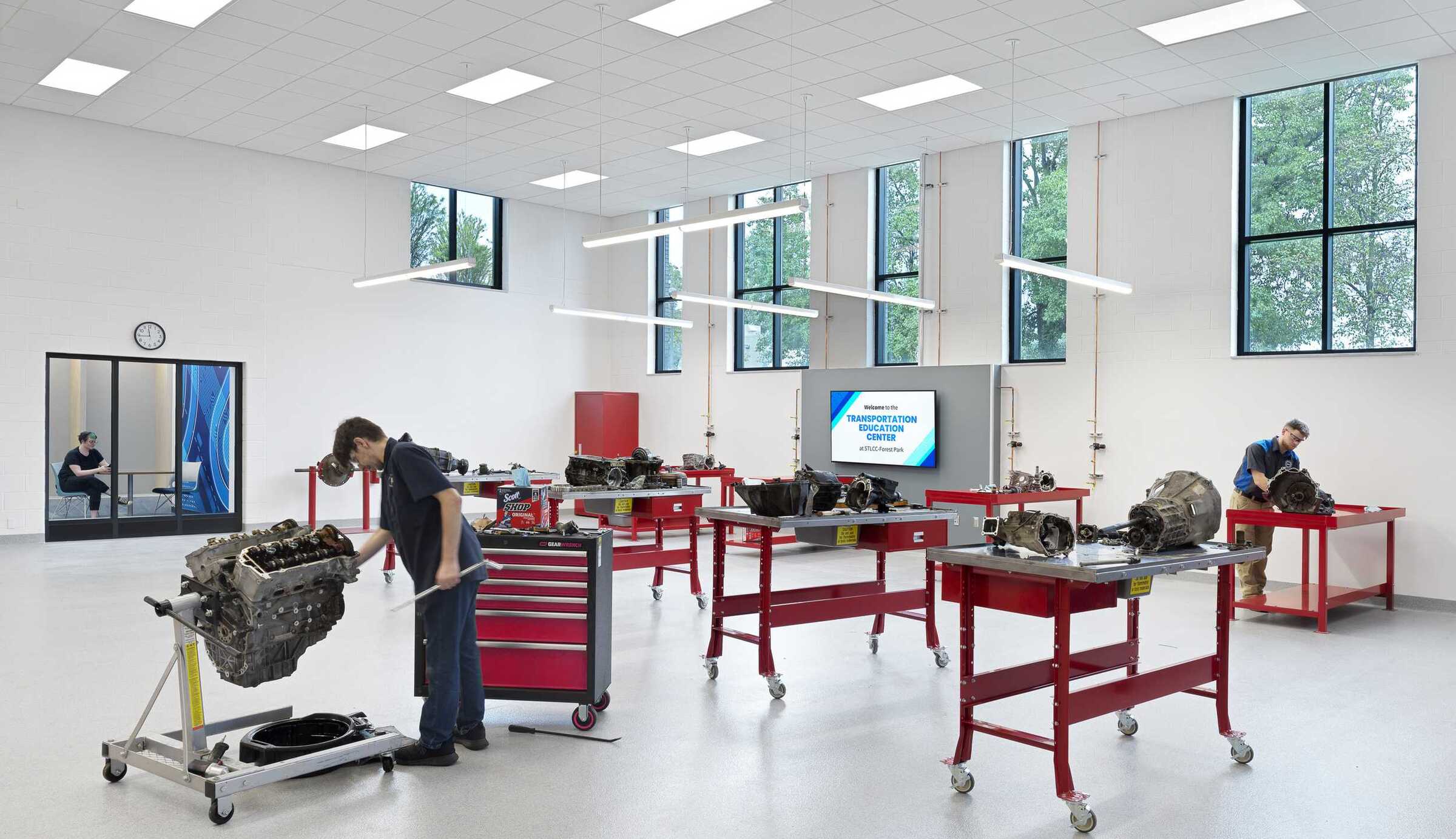
There is a growing shortage of technicians with the knowledge and skills to keep vehicles operational. Many higher education institutions (including St. Louis Community College, Olive Harvey College in Chicago, and Southern Illinois University Carbondale) have made investments in technology-rich, hands-on learning environments designed to attract and train the next generation of workers.
The numbers don’t lie: The TechForce Foundation’s 2024 Supply and Demand Report predicts that over the next five years, nearly 1 million entry-level transportation technicians will be needed in the automotive, collision, diesel and aviation industries. Transportation education environments must align with the needs of the evolving automotive industry and support the learning styles of Gen Z students and returning students looking to upskill.
As the industry integrates more sophisticated technologies that support electric and hybrid vehicles, navigation systems, and autonomous and semi-autonomous vehicles, the automotive field offers an opportunity for students interested in hands-on, problem-solving environments that incorporate new technologies and evolving skills.
Exceptional automotive learning space design enhances student recruitment and retention, delivers a high-quality educational experience and builds social communities on campuses.
...
Discover more in the original article published in American School & University Magazine.

About the Authors
Lori Everett, AIA, NCARB, LEED AP is princiapl and vice president at FGM Architects. She is a leader in FGMA’s Higher Education practice, designing spaces that support every student’s unique needs, helping them feel connected and empowered to thrive. Lori also serves as FGMA’s library subject matter expert; her love for libraries stems from a belief in lifelong learning and the importance of providing inclusive spaces that serve everyone in the community.
Cory Kamholz, AIA, LEED AP, is a Design Principal with FGMA and has 25 years of experience designing higher education projects. He is passionate about design excellence, sustainability and helping clients find creative solutions to their unique challenges. Cory received his B.A. in Architecture from Washington University and went on to earn a M. Architecture degree from the University of Wisconsin-Milwaukee where he was awarded the AIA Henry Adams Medal.
News & Insights
All Articles
Beyond the Field: How FGMA Designs PK-12 Athletic Facilities that Build Community
