
Back
A First Responder’s Perspective on Fire Station Design with Architect Michael Seppala, AIA
It’s a rare perspective: designing fire and rescue facilities while actively serving inside them. For more than 20 years, Michael Seppala, AIA, has answered calls ranging from medical emergencies to complex technical rescues.
“I’m with the Rescue Squad We respond to medical calls, vehicle crashes, rope and water rescues,” he shared. “It’s a different lens on the same mission.” That dual role shapes how he approaches design at FGMA — bringing firsthand insight into what responders need, how teams move and how spaces can perform under pressure.
By day, Michael helps design environments that support first responders and the communities they serve. But when the call comes, he steps into those same environments as a Lieutenant with the Sterling Volunteer Rescue Squad in Loudoun County — responding in real time to the kinds of moments his work at FGMA is meant to support.
Fire Station Design Through a First Responder’s Lens
And that lens informs everything he does. Michael often describes himself as “bilingual” in firefighting and fire station design. He understands what it feels like to come back from a call at 3 a.m. carrying more than just equipment. He also knows how hard it can be for departments to articulate what they need in a building that must function flawlessly under pressure.
Tradition and Change in Fire Station Design
Tradition in the fire industry runs deep. In many stations, the apparatus bay doubles as a gathering space. It is where stories are told and camaraderie grows. But it is also where contaminants linger — even when firefighters are fully suited. Research continues to show how carcinogens can travel beyond the bay and into living areas if stations are not carefully zoned and routines are not supported by design.
Michael sees both sides of the challenge: the cultural pull of old habits and the health realities that first responders face daily. As he explains it, "There's 250 years of history in the American fire service, but change comes slowly. Tradition runs deep — and it doesn’t always make room for progress.”
Designing Healthier Fire Stations: Red/Yellow/Green Zoning
Michael works in a fire station he also helped design — a rare opportunity to experience his ideas as the end user, not just the designer. That perspective sharpened his attention to details that do not always show up on a floor plan.
One example of design not aligning with the real need: a day room with a dramatic vaulted ceiling might look impressive. But after a long shift, scale and atmosphere matter.
“After midnight, you don’t want to feel like you’re in a grand hall,” Michael said. “You want something that feels calm, quiet and human. It’s about recovery.”

Concord Township Fire Station No. 1 features a modern, cozy day room with oversized recliners, natural light from adjacent windows and lowered contemporary light fixtures to create a relaxed, inviting atmosphere.
Sleep Hygiene and Wellness in Modern Fire Station Design
Sleep hygiene is another area where Michael’s field experience shapes his design thinking. Even on a quiet night, rest is fragmented. Tones (the alert system that signals an incoming emergency call) can drop at any moment. A bunkmate may be on a different call schedule. The body stays on alert, even during downtime.
For Michael, single bunk rooms are a practical response to the realities of shift work. Thoughtful acoustics, dimmable lighting, blackout window shades and access to daylight shape spaces where first responders can reset between calls.

He has also seen change take root. More departments are talking openly about wellness, carcinogen risk, mental health and biophilic design. Red/Yellow/Green design strategies are becoming more familiar, a critically important shift in modern fire station design.
Even when firefighters are wearing full turnout gear, microscopic particulates from fires can still reach exposed skin. If those contaminants are not removed as soon as possible, they can be transferred to door handles, furniture and other surfaces throughout the station. Once that happens, the contamination spreads beyond the apparatus bay into living and sleeping areas and other surfaces throughout the station.

UV-light photographs from an International Association of Firefighters (IAFF) full-ensemble particle exposure testing at the Research Triangle Institute (RTI) in early 2015, showing where particles that can enter the garment through various openings, closures and gaps, highlighting the importance of proper decontamination and the need for adequate personal protective equipment.
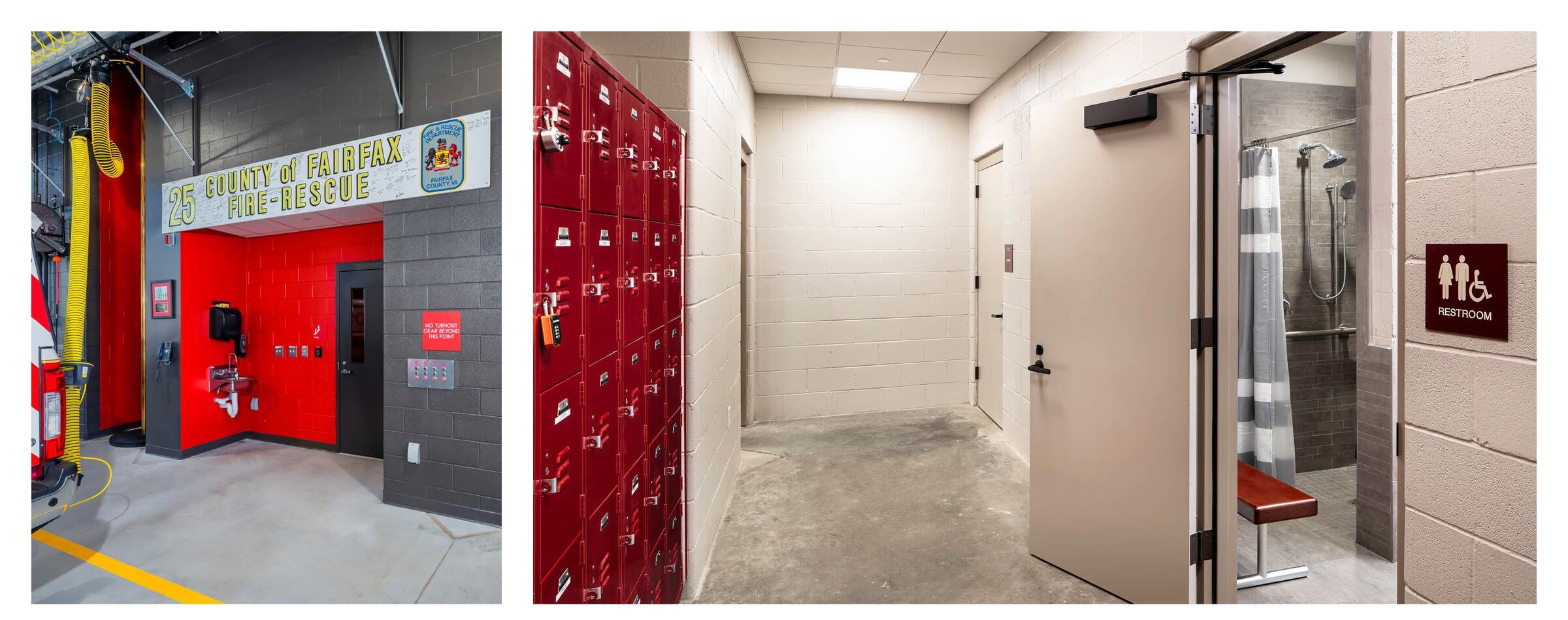
Handwashing station in an apparatus bay with clear signage reminding firefighters "No turnout gear beyond this point" (left) and the decontamination showers and lockers where clean clothes are stored (right).
For Michael, one design feature stands out as essential in every future station: Sinks and boot wash stations in the apparatus bay before entering the station, even before entering the decontamination area. By cleaning hands and boots before firefighters step inside, departments can stop one of the most common pathways contaminants take into the building and reinforce healthier routines from the moment crews return from a call.

Translating Firefighter Needs Into Better Fire Station Design
In planning meetings, Michael often finds himself translating between first responders and designers. A chief may describe wanting a space that “just feels right.” Michael can connect that instinct to adjacencies, ceiling heights or circulation patterns that align with daily routines. When firefighters hesitate to give up the bay as a hangout space, he understands why — and can help teams find alternatives that preserve camaraderie without compromising health.
His volunteer service has always centered people. That same commitment grounds his design work. For Michael, a station is not just a building. It is a second home for crews who serve their communities around the clock. When design decisions support their health, rest and relationships, the impact reaches far beyond the walls.
250 years of tradition carry weight. But so does lived experience. By bridging both, Michael brings a steady, human perspective to conversations about what fire and rescue stations can — and should — become.
Frequently Asked Questions about Fire Station Design
What is the difference between a fire department and a rescue squad?
Fire departments primarily respond to fires and fire-related emergencies. Rescue squads came into being to respond to all other emergency people found themselves in. Once they rescued people from those emergencies, they needed to treat their injuries and transport them to the hospital, so emergency medical service was a natural next step . In many communities, they operate within the same combined system but serve distinct operational roles.
What is Red/Yellow/Green zoning in fire station design?
This zoning approach separates spaces by contamination risk. Red zones include apparatus bays. Yellow zones act as transition spaces, including decontamination areas. Green zones are clean living areas such as bunk rooms, kitchens and day rooms. Clear separation and circulation paths help reduce carcinogen exposure.
Why is sleep hygiene important in fire and rescue stations?
First responders often work 24-hour shifts and may be awakened multiple times a night. Fragmented sleep affects physical health, mental well-being and job performance. Design strategies such as single bunk rooms, acoustic separation, controllable lighting and access to daylight can support better rest between calls.
News & Insights
All Articles
Community Engagement Shapes Meaningful School Design